Classes

Showing posts with label united states. Show all posts

04 April, 2012

Week of April 2nd in Language Workshops

For the last week of classes at the end of April, there will be an in-class activity which will count as a large portion of your assessment for the workshops.

This week in all workshops we discussed a bit of history of tourism in the United States, as well as the food culture. In some classes we discussed beer and wine in the U.S., and in some classes we also had time to discuss the vegetarian and vegan culture, and their growing popularity.

If you are interested in additional information, don't hesitate to post questions in the comments.

CLASS SUMMARY:

People had only been living in the US for 150 years when we gained our independence. Most people living in the US were for a long time on the east coast as it was still quite difficult to travel from place to place. Roads had just started being established, and traveling by horse or even by foot could take a very long time. One of the first trips west was organized by the President Thomas Jefferson. From 1804 to 1806 he sent the explorers Lewis & Clark on a strategic mission. We had recently purchased the territory of Louisiana, and wanted to assess the purchase. The main goals were to attempt to find a water passage between the Atlantic and the Pacific to be able to trade with Asia more easily. Another purpose was to ensure the Native Americans were aware of the soverignty of the US over them. Although a direct route was never found, this give an idea to how much time it can take someone to travel across the country. However, with the development of the locomotive in the 1880s, it became easier to travel from east to west.

Up until 1915, most people could not afford the luxury of traveling, and did not travel domestically for vacation. With the development of the automobile, Ford for example started marketing to the lower income population, explaining a car was easier to maintain than a hose, but cars were not affordable for the average American until 1913 when Ford dropped their prices. Although the automobile was finally available, we did not yet have a well-developed road system. We additionally had to deal with World War I and II, Prohibition from 1919-1933, and the fall of the stock market (bourse) in 1929. After the recovery of our economy we finally see a push for development of tourism and hotels in Florida as we think of them today. It was at this time many hotels were built in Miami in the style of Art Deco, a tourist attraction to this day. Florida remains a large tourist attraction, and additionally has added parks like Disney and Universal Studios, and more recently the Harry Potter theme park.

Throughout the 1950s to the 1970s, we had the auto boom in the US paired with the development of air travel. During the auto boom, cars became bigger and more comfortable, as well as more affordable, and gas prices were inexpensive as well. Our government also invested a great deal of money in the development of our highway systems, some of which replaced train lines. Air travel was really what finally brought the commerce of tourism to the US, making in easier for people from around the world, not just Canada and Mexico to travel to the States.


Source information -


Other materials and articles


30 March, 2012

Wednesday Workshops L2 L3 Mag

In group 4 and 5, I discussed employment, health insurance, taxes and gave an quick overview of the politic parties in the US. We later listened to This American Life episode "What kind of Country?" and read the transcript. I explained how we have three tiers of taxation in the US, with national income tax that pays for social security (the money you receive at 65 after you retire) and the health care and medication for the elderly as well, and other government programs. We additionally have state and local taxes. This can vary from state to state, as well at the sales tax (like the TVA) on purchased items. In group 5, I went a bit further in detail in the upcoming election and the concerns of Americans for the Democratic and Republican parties. I explained that the American campaigns for president cost a lot of money, and are often funded by Political Action Committees (PACs) which are special interest groups often funded by big businesses, who pay for campaigns in order to ensure politicians will vote for laws that benefit the businesses. I explained that Obama's campaign is entirely funded by small time donors, and he doesn't accept money from PACs. I showed a current campaign video called "Obamaville" produced by Republican candidate Rick Santorum as an example of some of the over-the-top campaign tactics we have in the US.

In group 3 - I gave a detailed grammar lesson on frequent mistakes at level 3, as well as the explanation between the words: trip, travel, vacation/holidays, voyages, journeys, & cruises. I explained the past simple, past continuous, and the present perfect. The present perfect most closely resembles the past tense in french, because it uses have, has and had. It's not used as past tense, but only in theses circumstances of

Experience

I have been to France.
He has worked in tourism.

Change Over Time

I have improved my English from my year abroad.
The travel industry has become more interested in eco-friendly tourism.
You have grown more mature from living on your own.
He has become less difficult to work with.

Achievement / Accomplishments

He has hiked in the Alps.
She has learned a lot from working in Africa.
The students have finished exams.

Uncompleted Action You Expect to Happen

James has not finished his homework.
She hasn't mastered Chinese, but she is improving.
They haven't arrived at the airport.
The train has not arrived yet.

Multiple Actions at Different times

I have had four classes already today.
We have had many problems while working on this project.
She has talked to many tourists about the town.

20 March, 2012

Workshops L2 L3 MAG & Reinforced L1

Yesterday in class, I had groups 4A, 6, and 3B.

In all groups, I asked students to give me examples of questions that are frequently asked in job interviews. The idea is that when preparing for an interview, you should try to think of the types of questions you will be asked, and prepare your answers in advance. This way you will be much more confident when it comes to the actual interview, and more comfortable with answers you have already practices reciting, especially if you ever have to do an interview in your second language of English. After the students gave me their questions, I read off this list of commonly asked interview questions. In some classes I gave additional CV advice. I also in some classes discussed using career building websites like LinkedIn.fr or .com to post your CV in French and English, and using facebook applications like BeKnown to build an online presence. Most employers these days will Google prospective employees, and it is a good sign to have an additional online presence other than facebook. I also advise students to start blogs about travel or something else they are interested in. It's good to have a good online presence, and will only become more important in the future.

In the Group 6 class, I also spent the last few minutes of class giving a basic overview of the United States geographically speaking, with a brief overview of our history as a country. I described the regions of the United States, and what brings tourists to each region. I additionally discussed travel across the United States. Many people believe that we use planes more to travel, however, travel is always quite expensive because things are much farther apart. I discussed the difference between using planes contrary to cars, where you can enjoy the country side, but that is takes much longer to travel from place to place by car, and can cost as much with the cost of gasoline. Our highways and roads are the easiest way to travel. I discussed the use of buses (autocars) that can be much cheaper than using trains. In the 1960s and 70s, we got rid of many train lines, or abandoned the train stations and tracks, and instead built roads and in some cases paved over the old train tracks, especially in the Northeast, where we had already a lot of well developed areas. Here is a list of some links to websites for different travel modes in the U.S.

Southwest - not exactly Ryanair, but a discount domestic flight company.

Amtrak - an expensive Train service that travels between States.

MTA - Manhattan Transit Authority - Here is an example of a city transit system - that also extends in the surrounding areas. For example, trains also leave New York City and go into the surrounding areas, much like the RER.

Greyhound Lines - A bus company that goes between most major cities in the U.S.

Megabus - A discount bus service, also available in the U.K. and Canada.

Boltbus - additional discount bus service.

18 October, 2010

Notes from the Desk - Tourist Sites

In the Regional Lesson I gave, in the Level 4 class, I talked about several Touristic Sites, they are listed here.


Statue of Liberty - www.statueofliberty.org
A gift from France.


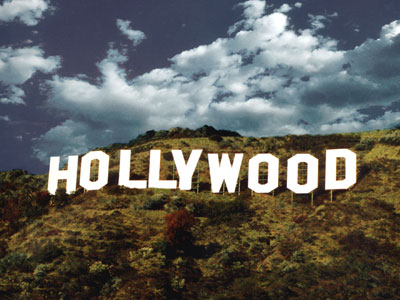
Hollywood - located within Los Angeles - http://www.latourist.com/index.php?page=hollywood-links


Yosemite National Park - http://www.nps.gov/yose/


Disney World - http://disneyworld.disney.go.com/
Disney Land is in California.


Grand Canyon - www.nps.gov/grca


Smithsonian Institute - www.si.edu
The Smithsonian Institution was founded for the "increase and diffusion" of knowledge from a bequest to the United States by the British scientist James Smithson (1765–1829), who never visited the new nation.


Mount Rushmore - www.nps.gov/moru/
Sculpted by Gutzon Borglum and later by his son Lincoln Borglum. It was originally concived to promote tourism in South Dakato.The presidents were originally to be sculpted from head to waist, but lack of funding called the project quits after 1941.


Mardi Gras - www.mardigrasneworleans.com/
Self explanatory.

Yellowstone National Park - www.nps.gov/yell
The first national park in the world, and Native Americans have occupied this territory for 11,000 years. It is mostly located in Wyoming, but also extends into Idaho and Montana as well. It's most famous attraction is Old Faithful, which is a geyser that explodes every 60 to 90 minutes, and the explosion lasts anywhere from 1.5 minutes to 5 minutes each time.
Colonial Williamsburg - www.history.org
Located in Virginia, it includes buildings dating from 1699 to 1780.Re-enactors try to emulate the Revolutionary mentality of the people living here at the time. It was a center for the molding of the American Government and its use of Democracy.


Gettysburg, Pennsylvania - www.gettysburg.com
The changing point of the Civil War, which took place from 1861 - 1865. Prior to this Battle and the Gettysburg Address given by Abraham Lincoln, the South was winning the war. After this Battle, the Northern States (the Union) made significant strides to securing a victory.


The Alamo - www.alamo.org
Texan-Americans troops were settled in a Fort named the Alamo in what was previously Mexican Territory during the 1800s. The Mexicans threatened to take back their land by force, and they did. This became known as the Battle of the Alamo, known for the cry "Remember the Alamo". This helped to trigger the Mexican War, in which the U.S. eventually won, and took significant amounts of territory from Mexico, and rejoined Texas with the Union.


Golden Gate Bridge
- www.goldengatebridge.org/visitors/

A prefect example of a 'suspension' style bridge. The second longest of its kind in the U.S., the first longest being the Verrazano-Narrows Bridge in New York City, which connects Brooklyn and Staten Island.


Willis Tower - (Formerly known as the Sears Tower) - www.willistower.com
The site of the tallest building in North America.